Setting a Table for an Unhurried Conversation
Setting a table for conversation means balancing useful space, clear sightlines and a few chosen objects, so guests can reach the food and face one another.
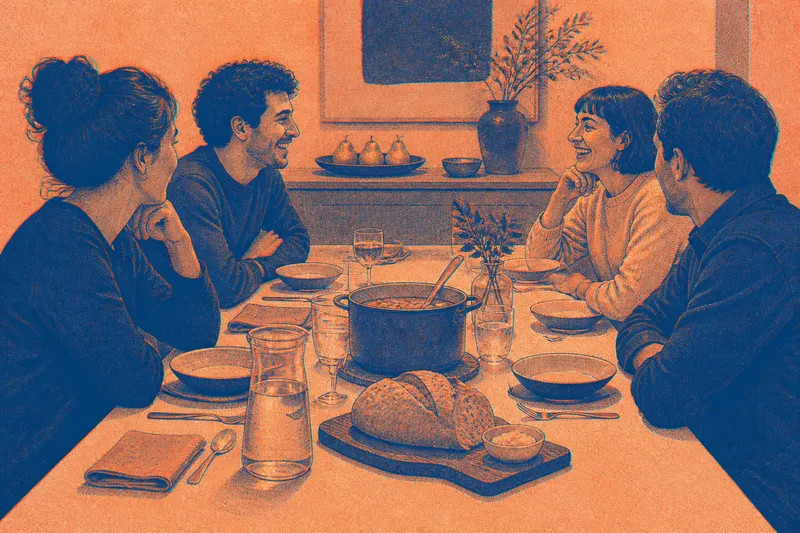
The most common mistake in setting a table for conversation is filling every empty patch. A tall arrangement or a cluster of spare dishes can make guests peer around objects and move things before they can eat. Setting a table for conversation works better when the layout gives people room to reach, pass and look at one another.
That does not mean leaving the table bare. A low bowl can serve the meal and give the centre a point of interest; a folded napkin can mark a place without becoming another obstacle. The useful distinction is between objects that support the gathering and objects that ask guests to work around them.
What should the table make easy?
Start with the actions guests will repeat: sitting down, serving food, passing a dish, pouring a drink and speaking across the table. If the meal is served family-style, leave a clear route for shared plates; if food arrives already portioned, the centre can stay more open.
Give each place setting enough room for its plate, cutlery and glass, and keep shared items distinct from personal ones. A jug or serving spoon placed where it is easy to reach needs no explanation. Guests should not have to rearrange their own setting just to pass a bowl.
How do spacing and sightlines shape conversation?
Spacing includes room for elbows and the path a dish takes between people, as well as the view between faces. A table may look balanced from the doorway and feel cramped once chairs are occupied.
Before guests arrive, sit in the chairs and look towards the people opposite and beside you. If a vase, candle holder or stack of dishes cuts across a face, move it to a sideboard or choose something lower. On a long table, a few low objects can give the centre rhythm without making a continuous barrier.
Light belongs to the same visual field. A reflective holder or bright flame can draw attention away from faces, while a lamp shade placed between guests can obstruct their view. Keep the centre modest enough that expressions remain easy to read.
Which objects earn a place at the centre?
A central object has more reason to stay when it serves the meal or connects quietly to the occasion. A shallow ceramic bowl might hold bread, while a low jar with a branch can add colour without taking over the table. One material or colour can give the arrangement character; several competing patterns and reflective surfaces can make it harder to settle the eye.
Judge an object from the chair rather than by its appearance on its own. A narrow vase can interrupt a sightline, while a broad, low dish may leave it open. If guests would need to lift a decoration to pass the food, it is taking space from the gathering.
Say you are setting a narrow table for supper, with shared bread and a pot of soup; these details are invented for this example. You place a low bowl of pears between the place settings, then sit in each chair and see that it hides the person opposite and narrows the route for the soup. You move the bowl to a sideboard, leave the middle clear for the pot and bread, and check the view again. The resulting trade-off is visible: the table has less decoration, but guests can see one another and pass the food without moving the bowl.
How should the layout change with the meal?
A table changes once the meal begins. Plates arrive, serving dishes travel and glasses shift, so leave some of the centre available for movement rather than filling it before anyone sits down.
For shared dishes, place a platter where more than one guest can reach it, and put a heavy pot near the person who will serve it. If the table is narrow, use a nearby counter or sideboard as a staging place and bring dishes over when needed. For food served from the kitchen, an open centre may be more useful than an extra decoration.
Keep the arrangement responsive. A water jug can sit within reach without occupying the centre, and spare cutlery can wait nearby until it is needed. The table need not remain as composed as it looked before the meal.
What do people ask about setting a table for conversation?
How high should a table centrepiece be?
Judge it from the chairs: guests should be able to see one another without leaning around it. If it interrupts the view between faces, lower it or move it aside.
Should every place setting match?
No. A shared colour, plate shape or material can make mixed ceramics and glasses feel coherent without making every setting identical.
Where should serving dishes go?
Place them within easy reach without crossing another person’s setting or blocking a view. If the table is too narrow, serve from a counter or sideboard and bring dishes over as needed.
Are candles suitable for a conversation table?
They can be, if their light does not distract from faces or make the food hard to see. Choose a position that leaves sightlines clear and keeps the flame away from anything that could catch fire.
How can the table feel welcoming rather than staged?
Leave signs of use visible. A jug, bread cloth or folded napkin suggests that guests are welcome to touch and share, while a setting arranged too precisely can make them hesitate before moving anything. Linen, glazed pottery and wood can feel approachable without requiring a theme.
Before guests arrive, check that chairs can be pulled out, shared items are reachable and the centre does not obstruct faces. Setting a table for conversation is less about adding a finishing touch than deciding what the meal needs and letting the rest of the surface remain available.